
Wrong Fuel in a 4WD or Diesel Ute: What Should You Do?
Putting the wrong fuel in a ute can happen quickly.
However, acting fast can help reduce further problems.
For example, you may put petrol in a diesel ute.
You may also put diesel in a petrol 4WD.
If this happens, keep the engine off.
Therefore, do not start or continue driving the vehicle.
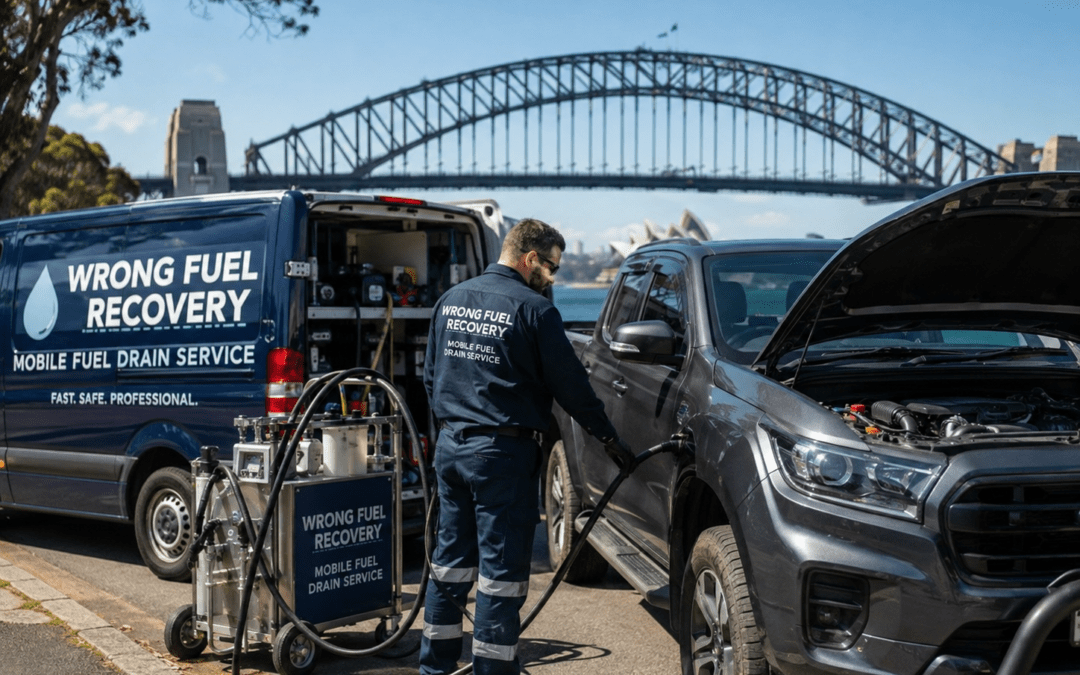
A professional technician may be able to help at your location.
However, some vehicles may need towing or workshop checks.
What Should You Do Immediately?
If you notice the mistake, act as soon as possible.
First, keep the engine switched off.
Next, avoid turning the ignition on.
Then, tell the service-station staff.
After that, check which fuel you added.
Also, keep your fuel receipt.
Finally, contact a wrong fuel recovery service.
Do not start the ute just to move away from the pump.
Instead, ask for help moving it safely.
Keep the Ignition Off
Keeping the engine off is very important.
In some vehicles, the ignition can activate parts of the fuel system.
Therefore, avoid unnecessary use of the ignition.
Also, do not repeatedly test whether the engine still starts.
Each start may move more contaminated fuel through the system.
Tell the Service-Station Staff
Tell staff what happened.
Also, explain that the vehicle must remain switched off.
If the ute blocks a pump, staff may help.
However, a heavy ute may not be safe to push.
The same applies to a loaded 4WD.
Therefore, wait for professional help when necessary.
Confirm Which Fuel You Added
Check the fuel type before calling.
For example, check:
- Fuel receipt
- Pump label
- Nozzle used
- Fuel-cap label
- Owner’s manual
Also, estimate how much wrong fuel you added.
Then, check how much correct fuel was already in the tank.
This information helps the technician.
Therefore, provide accurate details.
Do Not Add More Fuel to Dilute It
Do not add more diesel to petrol contamination.
Likewise, do not add more petrol after a diesel mistake.
Adding more fuel does not remove the contamination.
Instead, it creates a larger volume of mixed fuel.
Therefore, wait for professional advice.
Why Is Petrol in a Diesel Ute a Problem?
Diesel does more than power the engine.
It also helps lubricate parts of the fuel system.
However, petrol does not provide the same lubrication.
Therefore, petrol can increase wear inside a diesel system.
For example, pumps and injectors may be affected.
The outcome depends on several factors.
These include:
- Amount of petrol added
- Diesel already in the tank
- Whether the ignition was switched on
- Whether the engine started
- Distance driven
- Vehicle design
Therefore, early action is important.
What If the Engine Was Not Started?
This is usually the better situation.
Most of the wrong fuel may still be in the tank.
Therefore, the technician may be able to remove it before wider circulation.
A possible recovery process may include:
- Checking the vehicle
- Confirming the fuel mistake
- Draining the contaminated fuel
- Flushing affected areas
- Adding clean fuel
- Testing the vehicle
However, the exact process depends on the ute.
What If You Started the Engine?
Switch the engine off as soon as it is safe.
Then, do not restart it.
Also, tell the technician that the engine ran.
This information matters.
The fuel system may already contain contaminated fuel.
Therefore, more flushing or inspection may be required.
What If You Drove the Ute?
Find a safe place to stop.
Then, switch the engine off.
After that, contact a technician.
Also, tell them how far you drove.
The farther you drive, the farther the wrong fuel may travel.
Therefore, additional parts may need checking.
Warning Signs After Petrol Enters a Diesel Ute
A misfuelled diesel ute may develop several signs.
For example:
- Loss of power
- Rough running
- Hesitation
- Knocking
- Smoke
- Warning lights
- Stalling
- Hard starting
- Engine shutdown
If these signs appear, stop safely.
Then, switch the engine off.
Do not keep restarting the engine.
Instead, arrange professional assessment.
What If Diesel Was Added to a Petrol 4WD?
Not every ute or 4WD uses diesel.
Some vehicles use petrol.
Therefore, diesel can also be the wrong fuel.
Possible signs include:
- Misfiring
- Rough idling
- Hard starting
- Smoke
- Loss of power
- Spark-plug fouling
- Engine shutdown
Do not continue driving.
Instead, arrange fuel removal.
Are Utes Harder to Drain Than Cars?
Not always.
However, the job can vary between vehicles.
Several factors can affect the process.
For example:
- Tank size
- Tank shape
- Filler design
- Anti-siphon equipment
- Fuel-pump position
- Fuel-filter layout
- Ground clearance
- Underbody protection
- Vehicle modifications
- Tank access
In addition, some utes have very large tanks.
Therefore, the technician needs the exact model and tank details.
What If the Ute Has a Long-Range Tank?
Tell the technician before they arrive.
A long-range tank can change the recovery process.
For example, it may affect:
- Total fuel volume
- Tank location
- Fuel transfer
- Drainage time
- Equipment needed
In addition, some vehicles have two tanks.
Therefore, more than one tank may need checking.
Do not operate a tank-transfer pump.
Otherwise, the contamination may spread.
What Information Helps With an Auxiliary Tank?
Send clear information when possible.
For example, provide photos of:
- Fuel fillers
- Tank switches
- Fuel gauges
- Long-range tank
- Installation labels
- Tank controls
This can help the technician understand the setup.
However, some modified systems may need workshop help.
What If the Ute Is Towing?
Tell the provider that a trailer is attached.
This can affect access and recovery.
For example, consider:
- Trailer size
- Caravan weight
- Passengers
- Animals
- Equipment
- Traffic
- Safe waiting areas
Do not disconnect a heavy trailer beside moving traffic.
Instead, wait until the area is safe.
What If the Mistake Happens Off-Road?
Safety comes first.
Therefore, provide clear location details.
For example, send:
- GPS coordinates
- Track name
- Property name
- Nearest road
- Nearest landmark
- Surface condition
- Gate access details
- Vehicle weight
- Trailer details
Also, mention mobile reception.
A normal service vehicle may not reach some remote areas.
Therefore, recovery may happen in stages.
First, the ute may need movement to an accessible area.
Then, the fuel system can be serviced.
Can a Mobile Technician Drain a Ute On Site?
In many cases, yes.
Mobile recovery may be possible when:
- The engine stayed off
- The vehicle is safely parked
- The tank is accessible
- There is enough working space
- No serious symptoms are present
- The provider supports the vehicle
However, every vehicle is different.
Therefore, confirm support for your exact ute or 4WD.
When Might Towing Be Needed?
A tow may be the safer choice in some cases.
For example:
- Engine stopped while driving
- Vehicle will not restart
- Loud knocking remains
- Heavy smoke continues
- Warning lights remain
- Fuel is leaking
- Tank is damaged
- Fuel lines are damaged
- Vehicle travelled a long distance
- Location is unsafe
- Special diagnostics are needed
Mobile drainage and towing can also work together.
For example, the fuel may be drained first.
Then, the ute may go to a workshop.
Should You Drain the Ute Yourself?
No.
Fuel extraction involves flammable liquids.
Therefore, proper equipment is important.
Do not:
- Siphon fuel by mouth
- Use a household pump
- Drill the tank
- Disconnect random fuel lines
- Drain fuel onto the ground
- Pour fuel into drains
- Use unsuitable containers
- Work near flames
- Drain fuel inside an enclosed garage
Instead, use a professional service.
What Information Should You Give the Technician?
Prepare your details before calling.
For example, provide:
- Exact location
- Vehicle make
- Vehicle model
- Variant
- Model year
- Registration
- Engine type
- Correct fuel
- Wrong fuel added
- Amount added
- Previous fuel level
- Whether ignition was used
- Whether engine started
- Distance driven
- Warning lights
- Smoke or unusual noises
- Tank size
- Long-range tank details
- Vehicle modifications
- Trailer details
- Access restrictions
This information helps the technician prepare.
Therefore, give as much detail as possible.
Example of Useful Information
A clear description can save time.
For example:
“I put about 25 litres of petrol into my diesel ute. The engine has not started. It has a long-range tank.”
Also, provide your exact location.
This is more useful than saying the ute has simply broken down.
How Long Does Recovery Take?
There is no fixed time.
A simple fuel drain may be quicker.
However, large tanks can take longer.
Other factors include:
- Difficult access
- Two-tank systems
- Distance driven
- Fuel-system flushing
- Vehicle testing
Therefore, ask for an estimate when booking.
How Much Does a Diesel-Ute Fuel Drain Cost?
The cost depends on the situation.
For example, price may change based on:
- Location
- Time of attendance
- Tank size
- Amount of fuel
- Vehicle design
- Auxiliary tanks
- Modifications
- Whether engine started
- Distance driven
- Flushing
- Replacement fuel
- Towing
- Workshop repairs
Therefore, ask what the quote includes before work begins.
How Can Ute Owners Prevent Misfuelling?
A few simple habits can help.
First, read the fuel-cap label.
Next, check the pump label.
Also, do not rely only on nozzle colour.
If you use several vehicles, take extra care.
Similarly, check rental and replacement vehicles.
In addition:
- Label company fuel cards.
- Add a fuel reminder near the filler.
- Tell employees the correct fuel type.
- Keep AdBlue separate from diesel.
- Avoid refuelling while distracted.
Therefore, always check before filling.
Frequently Asked Questions
What Should I Do If I Put Petrol in My Diesel Ute?
Keep the engine off.
Then, tell service-station staff.
Also, keep the receipt.
Finally, call a professional fuel recovery service.
Can I Add Diesel to Dilute the Petrol?
Do not rely on dilution.
Adding diesel does not remove the petrol.
Therefore, ask for professional advice first.
Can a Ranger, HiLux or D-MAX Be Drained On Site?
Many utes may be suitable for mobile drainage.
However, the exact model and tank design matter.
Therefore, confirm support before booking.
What If My Ute Has a Long-Range Tank?
Tell the technician before dispatch.
The tank may hold more contaminated fuel.
In addition, it may use a transfer system.
Therefore, extra work may be needed.
Can I Drive a Few Kilometres to a Mechanic?
No.
Driving can move the wrong fuel through the system.
Therefore, keep the vehicle off.
Will the Fuel Filter Need Replacing?
Possibly.
The answer depends on how far the contamination travelled.
Therefore, the technician must assess the vehicle.
Can Roadside Assistance Help?
Possibly.
However, services vary between providers.
Some may tow the vehicle instead of draining it.
Therefore, explain that the problem involves wrong fuel.
What If I Put AdBlue in the Diesel Tank?
Do not start the engine.
AdBlue belongs in a separate tank.
Therefore, arrange professional help immediately.
Will the Ute Be Safe After a Fuel Drain?
It may return to normal after early recovery.
However, driven vehicles may need more checks.
Therefore, further inspection may be recommended.
Need Wrong Fuel Recovery for a Ute or 4WD in Sydney?
If you put the wrong fuel in your ute, keep the engine off.
Then, keep your fuel receipt.
Also, record how much fuel you added.
Tell the technician about any long-range tank or modification.
Finally, provide your exact location.
Professional mobile fuel recovery may be available for suitable utes and 4WDs across Sydney.

Misfuelling can feel overwhelming, especially at a busy Sydney service station. Staying calm is crucial. Panic often leads to quick decisions like starting the engine to move the car or tapping the accelerator to “check” if it runs properly. Even a few seconds of operation can push contaminated fuel deeper into the system. Pause, breathe, and avoid making the situation worse.
If the engine has already been started, switch it off immediately. Do not restart it under any circumstances. Keeping the ignition completely off prevents the fuel pump from circulating contaminated fuel through the injectors and fuel lines. The less movement inside the system, the lower the risk of damage.

Call Wrong Fuel Recovery & Mobile Mechanic or you can book online for immediate assistance.

Once help is on the way, there is nothing more you need to do. Our team at Wrong Fuel Recovery and Mobile Mechanic typically arrives quickly across Sydney and surrounding NSW suburbs. Using specialised equipment, they safely drain the contaminated fuel and refill your vehicle with the correct type, restoring normal operation without unnecessary stress on the engine.
Acting calmly and quickly makes all the difference. In most cases, these four simple steps turn a stressful moment into a manageable situation.
Across Sydney and surrounding suburbs in NSW, fast response is the key difference between a minor inconvenience and a costly repair. Timing truly is everything after misfuelling. The sooner the engine is switched off and contaminated fuel is removed, the greater the chance your vehicle returns to normal without lasting damage.
A small mistake at the pump does not have to become a long term problem. With prompt wrong fuel rescue, drivers across Sydney can protect their engines, reduce repair costs, and get back on the road with confidence.